

Gold Purity Explained: 22K, 18K, 916 & 750 — What Do They Mean?
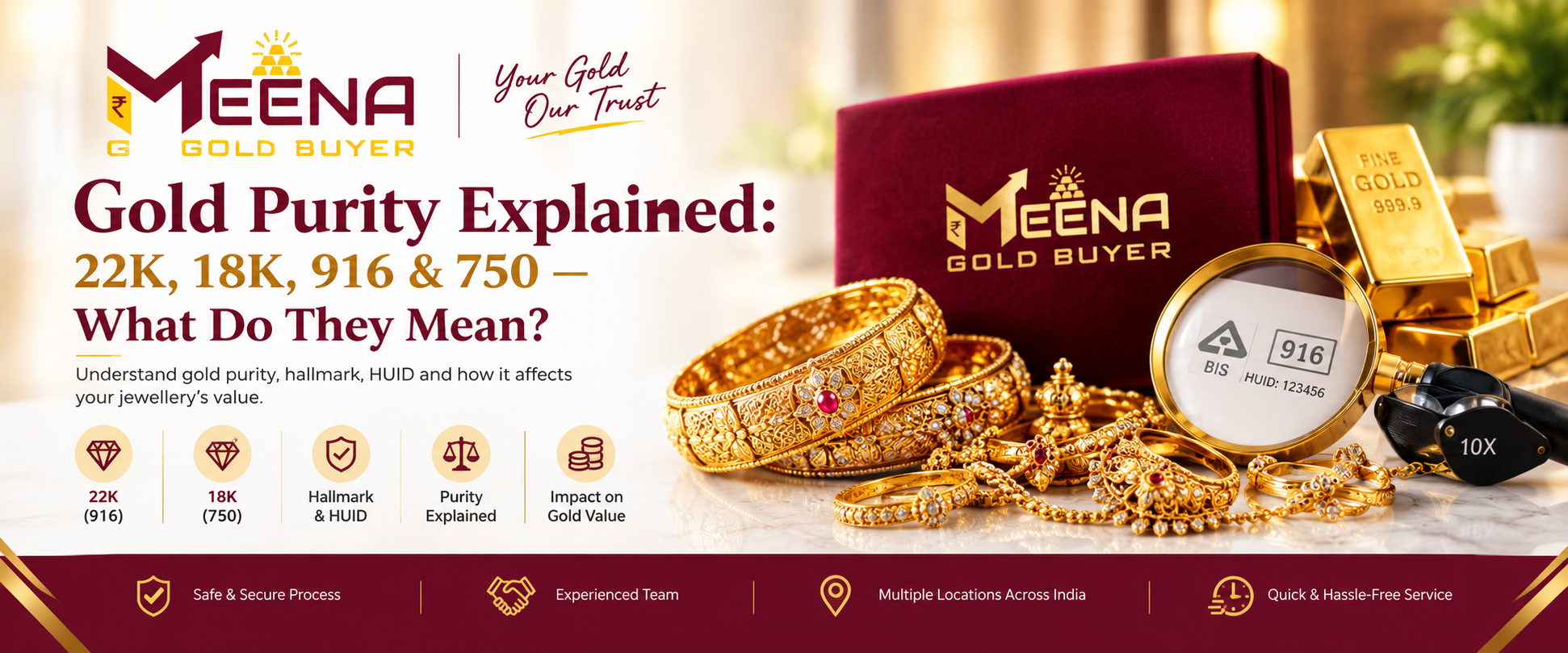
Buying or selling gold can feel confusing when you come across terms like 22K, 18K, 916, 750, 24K, hallmark, and HUID.
But these numbers are actually telling you something very important: how much pure gold is present in the jewellery.
Understanding gold purity helps you make better decisions when buying jewellery, checking an old gold item, or selling gold for the best possible value.
In this guide, we will explain what 22K, 18K, 916, and 750 mean, how gold purity is measured, and what you should check before selling your gold.
What Does Gold Purity Mean?
Pure gold is considered 24 karat (24K) gold.
However, pure gold is very soft and is generally not suitable for making everyday jewellery. To make jewellery stronger and more durable, gold is mixed with other metals such as silver, copper, zinc, or other alloys.
The karat number tells you how much gold is present out of 24 parts.
For example:
- 24K = 24 parts gold out of 24
- 22K = 22 parts gold out of 24
- 18K = 18 parts gold out of 24
The higher the karat, the higher the proportion of pure gold.
What Does 22K Gold Mean?
22K gold contains approximately 91.6% pure gold.
The remaining 8.4% consists of other metals that help make the jewellery stronger and more durable.
This is why you may see 22K gold marked as 916.
22K gold is commonly used for traditional jewellery because it offers a good balance between high gold content and durability.
22K Gold = 916 Gold
When you see:
22K → 916
they are referring to essentially the same purity level.
The term 916 indicates that there are approximately 916 parts of pure gold in every 1,000 parts of the alloy.
What Does 18K Gold Mean?
18K gold contains approximately 75% pure gold.
The remaining 25% consists of other metals.
This makes 18K gold harder and more durable than 22K gold, which is one reason it is commonly used for jewellery designs that require additional strength or detailed craftsmanship.
18K Gold = 750 Gold
You may see:
18K → 750
The number 750 means that approximately 750 parts out of every 1,000 parts are pure gold.
So, 18K and 750 generally represent the same purity level.
What Does 24K Gold Mean?
24K gold represents the highest commonly recognized gold purity.
It is approximately 99.9% pure gold.
Because pure gold is relatively soft, 24K gold is less commonly used for everyday jewellery.
It is more commonly associated with gold bars, coins, and other forms of investment gold.
22K vs 18K Gold: What Is the Difference?
The main difference is the amount of pure gold present.
| Gold Type | Purity | Common Mark |
| 24K | Approximately 99.9% | 999 |
| 22K | Approximately 91.6% | 916 |
| 18K | 75% | 750 |
| 14K | Approximately 58.5% | 585 |
Higher-purity gold contains more gold, while lower-purity gold contains a greater proportion of other metals.
What Does 916 Mean on Gold Jewellery?
If you see 916 stamped on a gold jewellery item, it generally indicates that the item contains approximately 91.6% pure gold.
This corresponds to 22K gold.
For example, if you have 10 grams of 916 gold, approximately 9.16 grams represents pure gold content, while the remaining weight comes from other metals in the alloy.
However, the final value of jewellery is not determined simply by multiplying the total weight by the percentage of pure gold.
Other factors can affect the amount you receive when selling gold.
What Does 750 Mean on Gold Jewellery?
A 750 mark indicates approximately 75% pure gold.
This corresponds to 18K gold.
For example, in 10 grams of 750 gold, approximately 7.5 grams represents pure gold content.
The remaining portion consists of other metals used to improve the strength, colour, or characteristics of the jewellery.
What Is a Hallmark?
A hallmark is an official indication of the purity of precious metal.
For gold jewellery in India, hallmarking helps consumers identify the purity category of their gold.
A hallmarked jewellery item may carry information related to its purity and identification.
However, it is important to understand that a stamp or marking alone should not be the only factor you consider when assessing the value of your gold.
What Is HUID?
HUID stands for Hallmark Unique Identification.
It is a unique identification number associated with hallmarked jewellery.
HUID helps improve transparency and traceability in the hallmarking process.
When buying or checking hallmarked gold jewellery, consumers can use the available hallmark information to verify the details.
Does Higher Purity Always Mean Higher Value?
Not necessarily.
Higher purity means a greater proportion of gold is present, but the amount you receive when selling jewellery depends on several factors.
These can include:
- Gold purity
- Net gold weight
- Current gold rate
- Jewellery type
- Presence of stones or other materials
- Applicable deductions
- Testing and evaluation results
- Buyer policies
For this reason, it is important to understand how your gold is being evaluated before agreeing to a selling price.
How Is Gold Purity Tested?
Professional gold buyers may use specialized testing methods to determine the purity of gold.
Depending on the jewellery and the evaluation process, testing can involve appropriate equipment and professional assessment.
The purpose of testing is to determine the actual purity of the gold rather than relying only on appearance or markings.
A transparent gold-buying process should clearly explain the testing and valuation to the customer.
What Should You Check Before Selling Gold?
Before selling your old gold jewellery, consider the following:
1. Check the Purity
Look for markings such as 916, 750, 999, or other purity indicators.
Remember that these markings indicate the stated purity category, but professional testing can provide a more reliable assessment.
2. Check the Gold Weight
The total jewellery weight may include stones, beads, or other non-gold materials.
The net gold weight is therefore important when calculating the value of your jewellery.
3. Check the Current Gold Rate
Gold prices can change regularly.
Always understand which gold rate is being used for your valuation.
4. Understand Deductions
Ask the buyer to clearly explain any deductions or adjustments applied during the valuation.
A transparent buyer should explain the calculation before you agree to the transaction.
5. Compare the Final Value
Don't focus only on the advertised gold rate.
Compare the complete calculation, including purity, net weight, rate, deductions, and the final amount you will receive.
Simple Example of Gold Purity
Suppose you have 10 grams of 22K gold.
22K gold is approximately 91.6% pure.
Therefore:
10 grams × 91.6% = approximately 9.16 grams of pure gold
Similarly, for 10 grams of 18K gold:
10 grams × 75% = approximately 7.5 grams of pure gold
This is a simplified illustration. Actual gold valuation can involve additional factors such as testing results, net weight, stones, deductions, and the applicable gold rate.
Gold Purity Quick Reference
Here is a simple way to remember the most common purity markings:
24K → approximately 99.9% purity → 999
22K → approximately 91.6% purity → 916
18K → 75% purity → 750
14K → approximately 58.5% purity → 585
The number stamped on jewellery can help identify the purity category, but professional evaluation is important when determining the actual value of gold you want to sell.
Why Transparent Gold Valuation Matters
When selling old gold, knowing the purity is only one part of the process.
You should also understand:
- How the gold is tested
- How the weight is calculated
- Which gold rate is being used
- Whether stones or other materials are deducted
- What deductions are applied
- How the final amount is calculated
A transparent valuation process allows you to understand exactly how the final offer was reached.
Sell Your Gold With Confidence
At Meena Gold Buyer, we believe that selling gold should be a clear and transparent experience.
Whether you have old jewellery, unused gold ornaments, or other gold items, understanding the purity and valuation process can help you make a more informed decision.
Our approach focuses on professional evaluation, transparent communication, and explaining the valuation before an amount is agreed.
If you are considering selling your gold, get in touch with Meena Gold Buyer for a professional gold valuation.
Final Thoughts
Understanding gold purity doesn't have to be complicated.
Remember these four important numbers:
24K → approximately 99.9% gold
22K → approximately 91.6% gold → 916
18K → 75% gold → 750
Knowing what these numbers mean can help you better understand your jewellery and make more informed decisions when buying or selling gold.
Before selling your gold, always ask questions, understand the testing and valuation process, and make sure the final calculation is explained clearly.
When you understand your gold, you can make a more confident decision about its value. Get your gold valued and understand its potential value before you decide.
Meena Gold Buyer — Your Gold. Valued Fairly.
Website: meenagoldbuyer.in
Contact: +91 9924 522 522
Purity • Weight • Valuation • Transparency
MEENA GOLD BUYER
