

What Happens to Your Old Gold After You Sell It? Understanding Gold Recycling
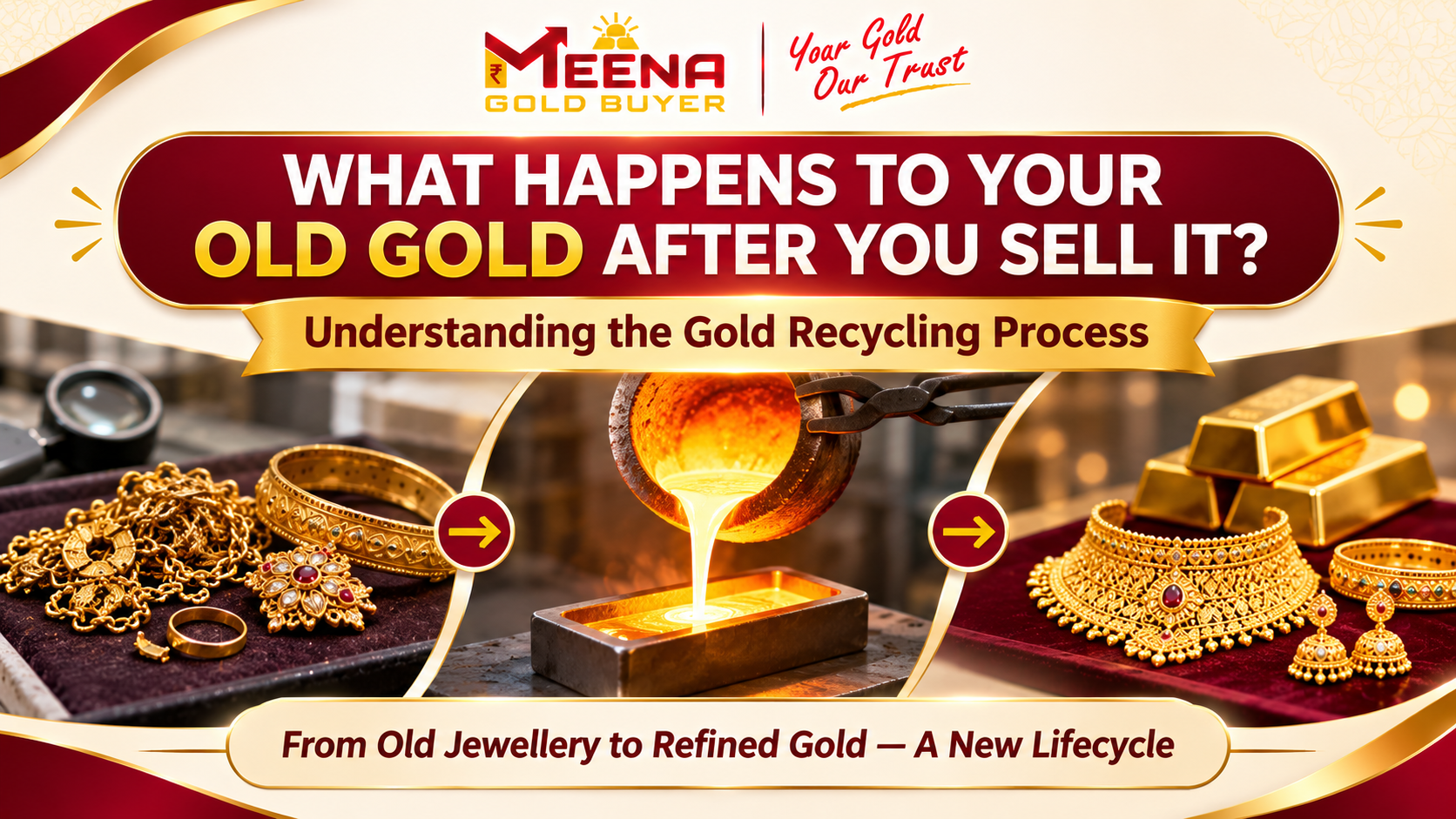
Have you ever wondered what happens to your old gold jewellery after you sell it?
That broken gold chain, outdated necklace, damaged bangle or unused pair of earrings may eventually become part of something completely different.
Gold is one of the most valuable and recyclable precious metals. Unlike many other materials, gold can be recovered, refined and reused multiple times without losing its fundamental properties.
But what actually happens after you hand over your old gold jewellery to a gold buyer?
Does it get melted immediately? Is it converted into gold bars? Can it become new jewellery?
In this guide, we will explain the gold recycling process, how old gold is transformed into new products, why gold recycling matters in India and what you should know before selling your unused jewellery.
1. What Is Gold Recycling?
Gold recycling is the process of recovering gold from previously owned jewellery, coins, bars, manufacturing waste and other gold-containing materials.
Instead of depending entirely on newly mined gold, the jewellery industry can recover existing gold and return it to the supply chain.
For example, jewellery that is broken, outdated or no longer wanted can enter the recycling process.
The recovered gold can then be refined and used in the production of new jewellery, coins, bars and other gold products.
Gold recycling plays an important role in the global gold market, particularly in countries like India, where gold jewellery has significant cultural, traditional and financial importance.
2. What Happens After You Sell Your Old Gold?
The journey of old gold can involve several stages. The exact process depends on the jewellery, its condition, its purity and the buyer's business model.
Let's understand the typical journey.
Step 1: Collection and Initial Assessment
The process begins when a customer sells old gold jewellery to a gold buyer.
The jewellery may include:
Old gold necklaces
Broken gold chains
Damaged bangles
Gold rings and earrings
Outdated gold ornaments
Unused gold jewellery
Gold coins and bars
The items are assessed to understand their composition, purity and relevant gold weight.
This initial assessment helps determine their potential value and the appropriate next step.
Step 2: Sorting and Classification
After collection, gold items may be sorted according to their type, composition and condition.
For example:
Gold jewellery
Broken gold ornaments
Gold coins
Gold bars
Mixed-metal jewellery
Gold-containing manufacturing scrap
Sorting helps determine how the material can be handled and processed.
Not every gold item follows the same recycling route. Some jewellery or investment products may be suitable for reuse or resale instead of immediate refining.
Step 3: Aggregation and Transfer for Processing
Gold collected from individual customers may be consolidated through gold buyers, jewellery businesses, scrap aggregators and other participants in the gold supply chain.
Depending on the business model, the material may eventually be sent to an appropriate gold refiner.
The purpose is to collect and process gold-bearing material efficiently while maintaining suitable records and traceability.
Step 4: Gold Melting and Refining
When old jewellery is processed as recyclable gold, it may undergo melting and refining.
During this stage, the material is processed to separate gold from other metals and impurities.
Gold jewellery is commonly made using alloys. Metals such as copper and silver may be mixed with gold to achieve the required strength, colour and properties.
Refining helps recover gold at the required level of purity.
The specific refining method depends on the material and the refinery's processes.
Step 5: Purity Verification
After refining, the recovered gold is assessed to establish its fineness and quality.
This is an important stage because refined gold must meet the required purity standards for its intended use.
In India, the Bureau of Indian Standards (BIS) has established standards and licensing arrangements relevant to gold refining and hallmarking.
Appropriate verification and documentation help establish the quality and identity of refined gold.
Step 6: Conversion into New Gold Products
Once refined, gold can enter the manufacturing supply chain again.
Depending on demand and the intended product, it may be used to manufacture:
Gold necklaces
Gold chains and bangles
Gold rings and earrings
Gold coins
Gold bars
Other gold products
The gold that once existed in an old, broken or unused ornament may eventually become part of a completely new product.
This is the fascinating part of gold recycling: the metal can continue through multiple product lifecycles.
3. Does Every Piece of Old Gold Get Melted?
No. This is an important point to understand.
Selling old gold does not necessarily mean that your jewellery will immediately be melted.
Depending on its condition, design, purity and the buyer's business model, an item may:
Be resold or reused.
Enter a jewellery exchange or reuse channel.
Be collected and sent for refining.
Become part of a larger recyclable gold lot.
For example, an old gold necklace in good condition may have a different commercial route from a broken chain or damaged ornament.
Similarly, gold coins and bars may sometimes be resold rather than melted.
The actual route depends on the item and the downstream buyer.
4. Why Is Gold Recycling Important in India?
India has a long-standing relationship with gold.
Gold jewellery is purchased for weddings, festivals, family occasions, savings and long-term ownership.
Over time, people's needs and preferences change.
Some jewellery becomes outdated, some gets damaged, and some remains unused for years.
Gold recycling helps bring this existing gold back into circulation.
Here are some important benefits.
1. Better Utilisation of Existing Gold
Gold that is no longer being used can return to the supply chain instead of remaining unused indefinitely.
2. Support for the Jewellery Industry
Recovered gold can become a source of raw material for jewellery manufacturers and other gold businesses.
3. Reduced Dependence on Newly Mined Gold
Recycled gold provides an additional source of supply alongside newly mined gold.
4. More Choices for Gold Owners
People can consider selling or exchanging eligible old jewellery when they no longer need it.
5. A Continuing Lifecycle for Gold
Gold can be recovered, refined and transformed into new products multiple times.
Gold recycling is therefore an important part of India's broader gold ecosystem.
5. Does Old or Broken Gold Lose Its Value?
No. The age or physical condition of gold jewellery does not automatically determine its gold value.
A broken chain may still contain valuable gold. An outdated necklace may have significant gold content even if its design is no longer fashionable.
The valuation of old gold generally depends on:
Gold purity
Relevant gold weight
Applicable gold buying rate
Jewellery composition
Testing and verification
Applicable transaction terms
For example, a broken 22K gold bangle may still contain substantial gold.
This is why getting your jewellery professionally evaluated is more useful than judging its value by appearance alone.
Remember that the final offer depends on the assessed gold content and the buyer's applicable valuation policy.
6. What Should You Check Before Selling Your Old Gold?
Before selling your old jewellery, make sure you understand the valuation process.
Here are some useful questions to ask your gold buyer:
What is the assessed purity of my gold?
How much is the relevant gold weight?
Which gold rate is being considered?
How is the final valuation calculated?
Can I understand or observe the testing process?
Are there any applicable deductions or adjustments?
What payment method and transaction documentation will be provided?
A transparent gold buyer should be able to explain the valuation clearly before you make your decision.
You can also compare offers from different buyers if you want additional confidence.
Never feel pressured to sell before understanding the complete valuation.
7. Is Selling Old Gold Better Than Keeping It Unused?
The answer depends on your personal requirements.
If you have jewellery that you no longer wear, selling it may help you understand its current monetary value.
However, some jewellery may have sentimental, family or inheritance value that goes beyond its gold content.
Before selling, consider:
Whether you still want to use the jewellery.
Whether it has sentimental or inheritance significance.
Whether you need the funds.
Whether the valuation is acceptable to you.
Whether selling is the right decision for your circumstances.
There is no need to rush.
Get a valuation, understand the offer and make an informed decision.
8. Selling Old Gold: Why Transparency Matters
When selling old gold, understanding the valuation process is just as important as knowing the market price.
A professional gold-buying experience should help you understand:
Purity: Know the assessed gold purity of your jewellery.
Weight: Understand the relevant gold weight used for valuation.
Gold Rate: Ask which applicable rate is being considered.
Valuation: Request a clear explanation of how the final offer is calculated.
Payment: Understand the payment process and obtain appropriate transaction documentation.
These steps can help you make a more confident and informed decision when selling old gold.
9. How Meena Gold Buyer Helps You Sell Old Gold
At Meena Gold Buyer, we believe that selling old gold should be a clear and understandable experience.
Whether you have old jewellery, broken ornaments, unused gold or other eligible gold items, our team helps you understand their potential value through a transparent valuation process.
Our gold-buying services include:
Old Gold Buying
Broken Gold Buying
Gold Jewellery Valuation
Gold Coins and Bars Buying
Pledged Gold Buying
Doorstep Gold Valuation
We aim to make the gold-selling experience convenient and transparent for customers.
You can enquire about our services and choose a convenient branch or doorstep valuation option, subject to location and service availability.
Our objective is to help customers understand their gold's value and make informed decisions.
Visit our website to learn more:
10. Frequently Asked Questions About Gold Recycling
Q1. What happens to gold jewellery after selling it?
Old gold jewellery may be reused, resold, collected for recycling or sent to a refinery for melting and refining, depending on its condition and the buyer's supply chain.
Q2. Is old gold melted to make new jewellery?
Sometimes. Gold that enters the recycling process can be refined and used to manufacture new jewellery and other gold products. However, not every old gold item is immediately melted.
Q3. Can broken gold jewellery be recycled?
Yes. Broken gold jewellery can be assessed for its gold content and may be sent for recycling and refining.
Q4. Does recycled gold have the same quality as newly mined gold?
Gold that has been properly refined and verified can meet the same required fineness standards. Its previous use does not inherently determine its final purity.
Q5. Why is gold recycling important in India?
Gold recycling helps recover existing gold, provides an additional source of gold supply and supports the jewellery manufacturing and refining industries.
Q6. Can I sell old gold jewellery to Meena Gold Buyer?
Yes. You can enquire about selling eligible old, broken and unused gold jewellery through Meena Gold Buyer's gold valuation services.
Visit https://meenagoldbuyer.in to learn more.
Conclusion: Every Piece of Gold Has a Story
The old jewellery sitting in your locker may have a completely different future.
It could be reused, exchanged, refined or transformed into a new gold product.
Gold recycling helps give previously owned gold another opportunity to become part of the jewellery and precious metals industry.
Before selling your old gold, understand its purity, weight and valuation. Choose a transparent buyer and make your decision with confidence.
If you have old, broken or unused gold jewellery, consider getting it evaluated to understand its potential value.
Meena Gold Buyer — Your Gold, Our Trust.
Visit Us: https://meenagoldbuyer.in
Explore Our Gold Buying Services Today!
