

How Is Old Gold Valued? Understanding Weight, Purity & Gold Rates
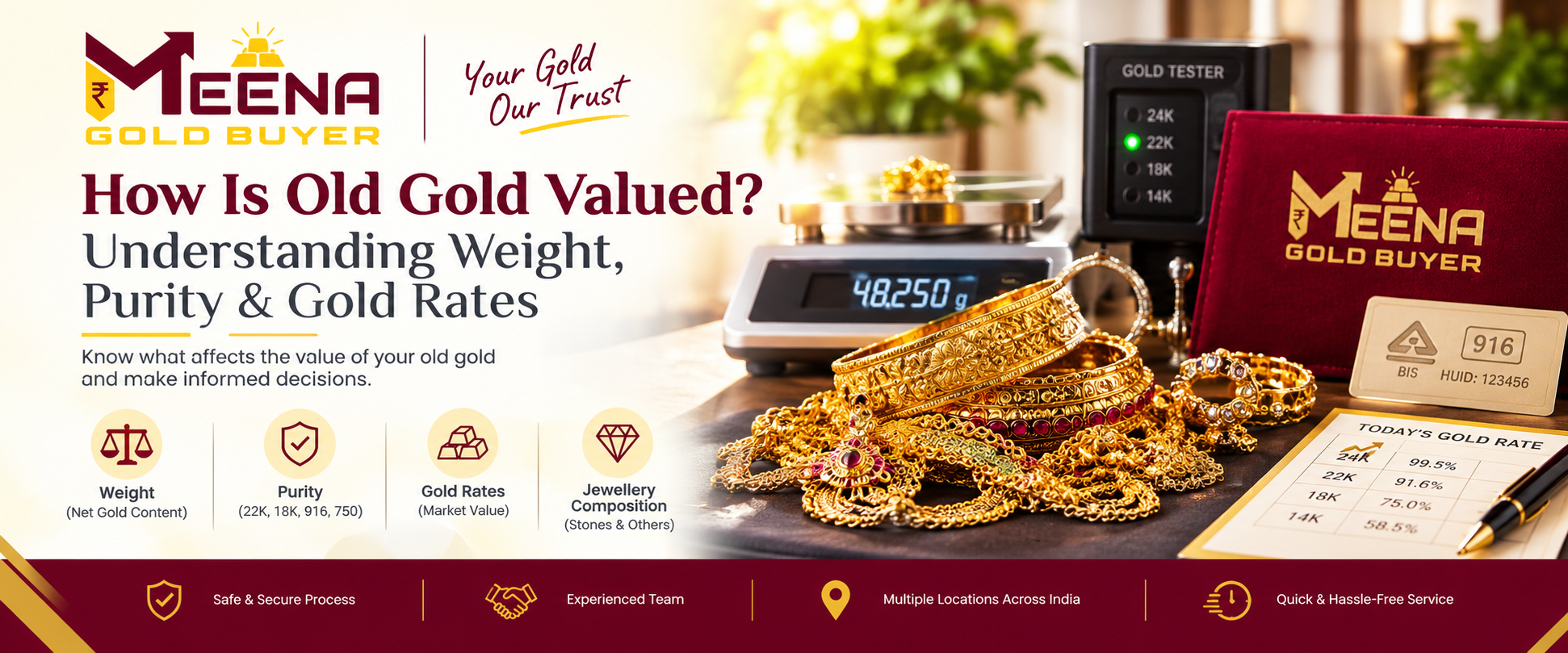
How Is Old Gold Valued? Understanding Weight, Purity & Gold Rates
Have you ever wondered how a gold buyer decides what your old jewellery is worth?
Many people assume that the value of gold jewellery depends simply on its weight. But that's not the whole picture.
When old gold is evaluated, several factors can influence the valuation, including gold purity, relevant weight, applicable gold rate and the composition of the jewellery.
Understanding these factors can help you ask the right questions and make a more informed decision when selling your old gold.
Let's break down how old gold valuation works in simple terms.
What Determines the Value of Old Gold?
The value of old gold jewellery generally depends on several important factors:
- Gold purity
- Relevant gold weight
- Applicable gold rate
- Jewellery composition
- Testing and verification
- The buyer's valuation process
These factors work together when determining the value of your gold.
A heavier piece is not automatically worth more than a lighter piece, because the purity and relevant gold content also matter.
1. Gold Purity
Gold purity is one of the most important factors in valuation.
Gold jewellery can have different purity levels, such as:
- 22K / 916
- 18K / 750
- 20K / 833
- 14K / 585
BIS currently lists these, along with 23K/958 and 24KS/995, among the permitted gold hallmark grades.
For example:
22K gold = approximately 91.6% gold
while:
18K gold = 75% gold
This means two jewellery pieces with the same weight may have different gold values if their purity is different.
If you want to understand these purity numbers in more detail, read our guide:
Gold Purity Explained: 22K, 18K, 916 & 750 — What Do They Mean?
2. Gold Weight
Weight is another important part of gold valuation.
However, the total weight of a jewellery item should not automatically be treated as the weight of pure gold.
Jewellery may include:
- Gold
- Precious or other stones
- Non-gold components
- Clasps
- Other materials
Therefore, the relevant gold content needs to be considered as part of the valuation.
A transparent valuation process should make it clear how the relevant weight is determined.
BIS guidance for consumer testing of old gold jewellery states that jewellery brought for testing should be weighed in the consumer's presence.
3. The Applicable Gold Rate
Gold prices change over time.
Therefore, the rate used during valuation is an important part of understanding the final amount.
For example, if the applicable gold rate changes, the value calculated for the same quantity and purity of gold can also change.
This is why it is useful to ask:
"Which gold rate is being used for my valuation?"
A professional buyer should be able to explain the rate being considered rather than leaving the customer to guess.
Meena Gold Buyer's current website states that its valuation is calculated using the current gold rate and verified purity.
4. Jewellery Composition
Not every piece of jewellery is made entirely from gold.
For example, a necklace may include gemstones, beads or other components.
Similarly, a ring may include a stone setting.
This is why simply multiplying the jewellery's total weight by a gold rate does not necessarily give you the final valuation.
The relevant gold content and purity need to be considered.
5. Gold Testing and Verification
Testing helps determine the purity of the gold being evaluated.
For consumers who want independent testing, BIS says jewellery or samples can be tested at a BIS-recognized Assaying & Hallmarking Centre.
BIS's guidelines for testing old gold explain that XRF can be used as a non-destructive preliminary method, while fire assay is a destructive method used for more comprehensive determination of gold content in that testing framework.
The exact testing method used by a gold buyer can vary, so customers should ask how their jewellery will be tested and what the results mean.
6. Hallmark and HUID
If your jewellery is hallmarked, you may see information indicating its purity.
Since the introduction of HUID, BIS states that a hallmark on gold jewellery consists of:
- BIS logo
- Purity in carat and fineness
- Six-digit alphanumeric HUID
HUID stands for Hallmark Unique Identification number. BIS says consumers can verify the HUID through the BIS Care App's "Verify HUID" feature.
However, older jewellery may not have modern hallmarking information.
BIS explicitly states that consumers can sell old unhallmarked as well as hallmarked jewellery to jewellers.
So don't assume that jewellery without a hallmark has no value.
A Simple Example of Gold Valuation
Let's understand the basic concept with a simplified example.
Suppose you have jewellery weighing:
20 grams
And suppose the relevant purity is:
22K / 916
The jewellery contains approximately:
91.6% gold
The relevant gold content would therefore be approximately:
20 × 91.6% = 18.32 grams
If the applicable rate for the relevant purity is represented by R, the basic value can be thought of conceptually as:
Relevant gold content × applicable rate
However, actual jewellery valuation can involve additional considerations, so this example is intended only to explain the basic relationship between weight, purity and rate.
The important lesson is:
Jewellery weight alone does not determine its final value.
Why Two Gold Buyers May Give Different Valuations
This is a common question.
You may take the same jewellery to two different buyers and receive different quotes.
Why can this happen?
Possible reasons include differences in:
- Purity assessment
- Relevant weight calculation
- Applicable rate
- Valuation methodology
- Jewellery composition
- Applicable deductions or transaction terms
This is why comparing only the final number may not always give you the complete picture.
Instead, ask each buyer:
What purity did you determine?
What relevant weight did you use?
What rate did you use?
How did you calculate the final amount?
A transparent explanation makes it easier to compare valuations.
Does 22K Gold Always Have More Value Than 18K Gold?
Not necessarily when comparing complete jewellery pieces.
22K gold has a higher gold proportion than 18K gold.
But the final value of a jewellery item also depends on its relevant weight and the applicable rate.
For example:
A heavier 18K piece and a much lighter 22K piece may have different overall values.
Therefore, don't judge the value of a jewellery item by purity alone.
Does Making Charge Matter When Selling Old Gold?
This is an important distinction.
When you originally purchased jewellery, the price may have included factors such as:
- Gold value
- Making charges
- Design
- Taxes
- Other applicable costs
When you later sell the jewellery, the valuation process is not simply a reversal of the original purchase invoice.
The relevant gold content, purity, weight and applicable buying terms are important to the valuation.
Therefore, don't assume:
Original purchase price = resale value
They are two different transactions.
What About Stones in Gold Jewellery?
If your jewellery contains stones, ask how they are being treated during valuation.
For example:
- Diamond rings
- Gemstone necklaces
- Stone-studded bangles
- Traditional jewellery with embedded stones
The total weight of the item may include both gold and non-gold materials.
Therefore, understanding the relevant gold weight is important.
If you're unsure, ask the buyer to explain the calculation before accepting the valuation.
What About Broken Gold Jewellery?
Broken gold jewellery can still be valuable.
You may have:
- Broken chains
- Damaged bangles
- Single earrings
- Old rings
- Outdated jewellery
- Damaged necklaces
- Jewellery you no longer use
The condition of the jewellery does not automatically mean that the gold has no value.
Instead of leaving unused gold in a drawer, you can have it professionally evaluated and decide whether selling is right for you.
What About Inherited Gold Jewellery?
Inherited jewellery often has emotional as well as financial value.
Before selling inherited jewellery, consider:
First — Identify the Jewellery
Understand what pieces you have.
Second — Check Hallmark Information
Look for available purity and HUID information.
Third — Get a Transparent Valuation
Ask for the purity, relevant weight and applicable rate to be explained.
Fourth — Take Your Time
You don't have to make a decision immediately.
A professional valuation should give you enough information to make your own decision.
What Should You Ask a Gold Buyer Before Selling?
Before accepting a valuation, consider asking these questions:
1. What is the purity of my gold?
Ask the buyer to explain the testing result.
2. What is the relevant gold weight?
Make sure you understand how the weight has been determined.
3. Which gold rate are you using?
Ask which applicable rate is being used.
4. How was my final value calculated?
The calculation should be explained clearly.
5. Can I see the testing?
A transparent process should allow you to understand what is happening with your jewellery.
6. What happens after I accept the valuation?
Understand the payment and transaction process before completing the sale.
Why Transparency Matters When Selling Gold
Gold is valuable.
For many families, jewellery also has emotional and personal significance.
That's why selling gold should not be based only on a number displayed at the end.
A good valuation experience should allow you to understand:
Purity → Weight → Rate → Calculation → Final Value
When each step is explained clearly, you can make your decision with greater confidence.
How Meena Gold Buyer Values Your Gold
At Meena Gold Buyer, the website currently describes a valuation approach based on transparent testing, verified purity and current gold rates.
The process is presented in three simple steps:
01. Get Your Gold Valued
Share your details and choose between a branch visit and doorstep service.
02. Test & Verify
The gold goes through the testing and verification process.
03. Get Your Payment
Once you accept the valuation, the transaction can be completed through an available eligible payment option.
Meena also currently lists:
- Sell Old Gold
- Free Gold Valuation
- Instant Cash
- Pledged Gold Sale
- Doorstep Service
among its services.
The company describes its valuation experience around accurate purity testing, live market pricing, a clear and secure process, and quick payment.
Why Choose a Transparent Gold Valuation Process?
When selling gold, you should feel comfortable asking questions.
A transparent process helps you understand:
What is my gold's purity?
How much relevant gold do I have?
What rate is being considered?
How was my valuation calculated?
What amount will I receive if I accept?
At Meena Gold Buyer, the stated approach is designed to keep the customer informed throughout the valuation process.
A Simple Checklist Before Selling Your Gold
Before visiting a gold buyer, keep this checklist handy:
☐ Collect the jewellery you want to sell
☐ Check for hallmark/HUID details where applicable
☐ Ask about purity testing
☐ Understand the relevant weight
☐ Ask which gold rate is being used
☐ Understand the calculation
☐ Ask about any applicable terms
☐ Compare valuations if you want to
☐ Make your decision only after understanding the offer
This simple checklist can help you approach the selling process with more confidence.
Final Thoughts
Understanding how old gold is valued can make the selling process much easier.
Remember the four key factors:
Purity
Relevant Weight
Applicable Gold Rate
Transparent Calculation
Don't hesitate to ask questions before selling your jewellery.
Your gold deserves to be evaluated through a process that is clear, understandable and easy to review.
If you're considering selling your old gold, you can request a valuation from Meena Gold Buyer through its branch or doorstep service options. Get your gold valued and understand its potential value before you decide.
Meena Gold Buyer — Your Gold. Valued Fairly.
Website: meenagoldbuyer.in
Contact: +91 9924 522 522
Purity • Weight • Valuation • Transparency
MEENA GOLD BUYER
